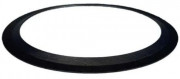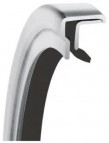

Under the heading “Garlock SEALS,” you will mainly come across three design principles in practice. The best-known is the PS-SEAL®: a high-performance radial shaft seal for rotating shafts, built around a stainless-steel housing with a GYLON® (modified PTFE) sealing lip and a static sealing element (often FKM). Within the PS-SEAL family you have a Standard version (single lip) and several non-standard lip configurations such as Back-to-Back, Tandem, Reverse, and a version with dustlip (an extra protective lip against contamination).
In addition, there is the PS-Lip: a loose, preformed GYLON® lip used when you want the PS-SEAL sealing principle, but cannot or do not want to apply a “ready-to-mount” unit (for example due to installation space or serviceability).
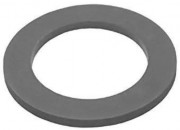
Finally, the PS-Static Seal (Gylon) also falls under this category: this is not a rotary lip seal but a static flat ring gasket for flanges/covers and other connections without relative movement.
The performance of Garlock seals is largely determined by the lip material: GYLON® is modified PTFE and is chosen specifically for its chemical resistance, low friction, and a wide temperature window. Garlock states a guideline temperature range for the lip material of –90 °C to +260 °C, with the important note that the actual seal temperature can end up higher than your process temperature would suggest due to frictional heat.
In the PS-SEAL Standard, the static element is often FKM, and you will see that this static element (not the PTFE lip) often becomes the practical “limiter”: Garlock Europe explicitly states for the Standard max. 10 bar and max. 205 °C (and “no FDA” for that specific standard build). For non-standard/special variants, the pressure (depending on the design) can increase further.
For food/pharma, the choice often revolves around FDA / EU 1935/2004 and behavior during CIP/SIP; for that, specific GYLON variants (and also Econol variants) are available that are tuned for compliance and (partial) dry-running.
|
Material |
Temperature range (guideline) |
Key properties (incl. trade-offs) |
|
GYLON® Black (graphite filled) |
approx. –90 to +260 °C |
Standard choice for lubricated applications; low friction and stable wear. Less intended for prolonged “hard” dry-running. |
|
GYLON® White (barium sulfate) |
approx. –90 to +260 °C |
Aimed at food/pharma: FDA/EN 1935 mentioned; partial dry-running possible, but remains sensitive to heat build-up at high speeds and marginal lubrication. |
|
GYLON® Blue (glass-microspheres) |
approx. –90 to +260 °C |
Very flexible (high recovery) and strong dry-running characteristics; often chosen in food/pharma to better accommodate tolerances/shaft wear. |
|
GYLON® Brown-White (dual additives) |
approx. –90 to +260 °C |
Focused on abrasive media and heat dissipation (additives per side); mentioned with an FDA/EN 1935 focus. |
|
Econol (F) |
approx. –90 to +260 °C |
Specifically mentioned for food/pharma, suitable for vacuum and excellent dry-running; typically requires good shaft/counterface quality to remain stable. |
|
MS (molybdenum disulfide) |
approx. –90 to +260 °C |
Focused on abrasive media; a more robust “wear setup” where dust/powder or abrasive slurry plays a role. |
|
FKM (static element, common) |
typically up to ~200–205 °C |
Practical static sealing element; in the Standard it can define the temperature/media limit relative to the PTFE lip. |
Garlock PS-SEALs are mainly chosen when a “standard” elastomer oil seal is no longer reliable due to higher pressure, higher surface speed, abrasive or aggressive media, or extreme temperatures. In that segment you often see them in pumps, mixers/agitators, conveyors (screw conveyors), separators and gearboxes, but also in processes where vacuum and CIP/SIP cleaning play a role.
An important use case is simplification as well: Garlock explicitly positions PS-SEALs as possible alternatives to mechanical seals and braided packing when you want to seal reliably with a more compact solution (of course within the correct operating window).
For static connections (flanges, covers, filter housings, process housings), the PS-Static Seal is the better fit: there the focus is on chemical resistance, compression behavior, and avoiding extrusion/leakage under pressure.
You start, quite “old school,” with the type of movement: if you have a rotating shaft, you are in PS-SEAL/PS-Lip territory; if you have a static flange/cover joint, you look at the PS-Static Seal. For PS-SEAL, you then choose the lip configuration based on the problem you are solving: a dustlip when external contamination is your main risk, tandem when you want extra sealing margin towards the medium, back-to-back when you want to seal on both sides within one unit, and reverse when the effective pressure side/orientation requires it.
Next, the selection depends on your operating window: Garlock Europe states for the PS-SEAL Standard as a guideline max. 10 bar and (in that standard build) max. 205 °C, while Non-Standard/Special variants (depending on the design) can go to higher pressures. In addition: according to Garlock the lip material can handle –90 °C to +260 °C, but you really need to account for frictional heat (p×v) and lubrication.
Then comes the engineering part that often makes the difference between long and short life: the counterface. Garlock provides specific guideline values for surface finish (Ra 0.1–0.4 μm, Rz 0.6–2.0 μm) and explicitly asks for no helical spiral grooves (which can create a pumping effect and cause leakage). A hardness of 60 HRC is mentioned, and for high p×v loading Garlock recommends an appropriate (wear-resistant) coating/solution.
Finally, material selection is mostly “logic”: Black for lubricated all-round service, White/Blue/Brown-White/Econol when compliance and/or (partial) dry-running is more important, and MS when abrasion is dominant. If you use a PS-Lip, you must also design your housing/groove and the static sealing element correctly, because you then control the “cartridge part” yourself.
Garlock Seals have established themselves as a premium brand, delivering exceptional sealing performance and reliability. With their wide range of options, including gylon seals and various material choices, Garlock provides solutions for diverse industries and applications. Choose Garlock Seals for reliable, high-quality sealing solutions that meet your specific requirements.
If you would like more information about Garlock seals or if you do not know which Garlock seal you should have, please feel free to contact us.
A PS-SEAL is a complete, ready-to-mount solution (housing + lip + static seal). You choose a PS-Lip when you want the PTFE/GYLON sealing principle, but need or want to create the installation/construction yourself due to space, design choices, or serviceability.
Standard is the basic version with one lip. Back-to-Back uses two lips in opposite directions (sealing to both sides), while Tandem places two lips in the same direction to create extra sealing margin in one direction.
Yes, versions/materials are explicitly mentioned with FDA and (possibly) EN 1935/2004, and Garlock positions PS-SEALs specifically in food, beverage and pharma to handle repeated CIP/SIP cycles, provided you choose the right compound.
Surface finish and “machining marks” are crucial: Garlock states guideline values (Ra/Rz) and warns against helical marks due to a potential pumping effect. Under heavy loading, sufficient hardness helps and, if needed, an appropriate wear-resistant solution.
In many applications they are indeed used for that purpose as a more compact alternative, especially when you want to increase reliability with one robust lip-seal solution. Feasibility still depends on your p×v loading, temperature, medium and the quality of the counterface.