


| Product | Product Id | Type | Garlock Number | Inside Diameter | Outer Diameter | Height | Material | Color | Stock | Price | ||
|---|---|---|---|---|---|---|---|---|---|---|---|---|
|
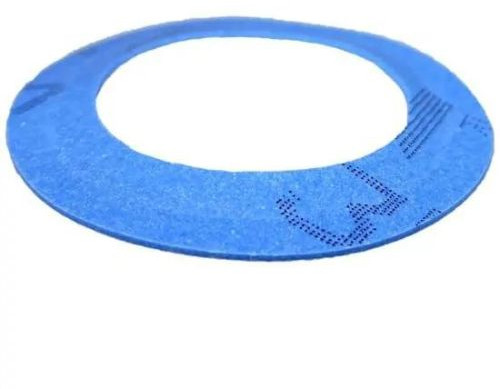
29312 | Garlock PS-LIP Seal | MEC01-10977 | 72 | 92 | 1 | GYLON | Blue | 0 |
Request
|
Details | Quote |
|
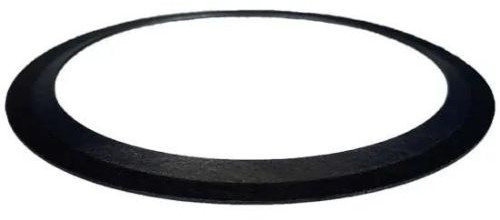
29702 | Garlock PS-LIP Seal | MEC01-10641 | 31.75 | 51 | 1 | GYLON | Black | 0 |
Request
|
Details | Quote |
|
|
29701 | Garlock PS-LIP Seal | MEC01-10880 | 30.5 | 45 | 1.6 | GYLON MS | Black | 0 |
Request
|
Details | Quote |
|
|
29700 | Garlock PS-LIP Seal | MEC01-10121 | 30 | 46 | 0.8 | GYLON | Black | 0 |
Request
|
Details | Quote |
|
|
29699 | Garlock PS-LIP Seal | MEC01-10642 | 30 | 45 | 1 | GYLON | Black | 0 | € 65,90 | Details | Quote |
|
|
29698 | Garlock PS-LIP Seal | MEC01-10782 | 30 | 42 | 1 | GYLON | Black | 0 |
Request
|
Details | Quote |
|
|
29697 | Garlock PS-LIP Seal | MEC01-10801 | 28.58 | 44.45 | 0.8 | GYLON | Black | 0 |
Request
|
Details | Quote |
|
|
29696 | Garlock PS-LIP Seal | MEC01-10116 | 28.57 | 44.45 | 0.8 | GYLON | Black | 0 | € 58,02 | Details | Quote |
|
|
29695 | Garlock PS-LIP Seal | MEC01-10639 | 28 | 46 | 1 | GYLON | Black | 0 | € 74,26 | Details | Quote |
|
|
29694 | Garlock PS-LIP Seal | MEC01-10876 | 28 | 45 | 1 | GYLON | Black | 0 |
Request
|
Details | Quote |
|
|
29693 | Garlock PS-LIP Seal | MEC01-10702 | 28 | 43 | 0.8 | GYLON | Black | 0 |
Request
|
Details | Quote |
|
|
29692 | Garlock PS-LIP Seal | MEC01-11053 | 28 | 42 | 0.8 | GYLON | Black | 0 |
Request
|
Details | Quote |
|
|
29691 | Garlock PS-LIP Seal | MEC01-10603 | 28 | 41 | 1 | GYLON | Black | 0 |
Request
|
Details | Quote |
|
|
29690 | Garlock PS-LIP Seal | MEC01-11023 | 28 | 40 | 0.8 | GYLON | Black | 0 |
Request
|
Details | Quote |
|
|
29689 | Garlock PS-LIP Seal | MEC01-10456 | 28 | 38 | 0.8 | GYLON | Black | 0 | € 46,96 | Details | Quote |
|
|
29688 | Garlock PS-LIP Seal | MEC01-10347 | 26 | 41 | 0.8 | GYLON | Black | 0 |
Request
|
Details | Quote |
|
|
29687 | Garlock PS-LIP Seal | MEC01-10734 | 25.5 | 39 | 1.6 | GYLON KF | Black | 0 | € 63,92 | Details | Quote |
|
|
29686 | Garlock PS-LIP Seal | MEC01-10899 | 25 | 45 | 0.8 | GYLON | Black | 0 | € 65,66 | Details | Quote |
|
|
29685 | Garlock PS-LIP Seal | MEC01-10137 | 25 | 38 | 0.8 | GYLON | Black | 0 |
Request
|
Details | Quote |
|
|
29684 | Garlock PS-LIP Seal | MEC01-10305 | 25 | 37 | 0.8 | GYLON | Black | 0 |
Request
|
Details | Quote |
|
|
29683 | Garlock PS-LIP Seal | MEC01-11071 | 24 | 36 | 1 | GYLON | Black | 0 |
Request
|
Details | Quote |
|
|
29682 | Garlock PS-LIP Seal | MEC01-10233 | 24 | 36 | 0.8 | GYLON | Black | 0 | € 43,76 | Details | Quote |
|
|
29681 | Garlock PS-LIP Seal | MEC01-10719 | 22 | 50 | 0.8 | GYLON | Black | 0 |
Request
|
Details | Quote |
|
|
29680 | Garlock PS-LIP Seal | MEC01-11068 | 22 | 37 | 1 | GYLON MS | Black | 0 |
Request
|
Details | Quote |
|
|
29679 | Garlock PS-LIP Seal | MEC01-10336 | 22 | 37 | 0.8 | GYLON | Black | 0 | € 49,16 | Details | Quote |
|
|
29678 | Garlock PS-LIP Seal | MEC01-11080 | 22 | 34 | 1 | GYLON | Black | 0 | € 47,70 | Details | Quote |
|
|
29677 | Garlock PS-LIP Seal | MEC01-11282 | 22 | 34 | 0.8 | GYLON | Black | 0 |
Request
|
Details | Quote |
|
|
29676 | Garlock PS-LIP Seal | MEC01-11196 | 20 | 41 | 0.8 | GYLON | Black | 0 | € 61,96 | Details | Quote |
|
|
29675 | Garlock PS-LIP Seal | MEC01-10545 | 20 | 35 | 0.8 | GYLON | Black | 0 |
Request
|
Details | Quote |
|
|
29674 | Garlock PS-LIP Seal | MEC01-10310 | 20 | 35 | 0.8 | GYLON | Black | 0 | € 47,20 | Details | Quote |
In practice, the PS-Lip is often used as a set: the dynamic GYLON® sealing lip forms the sealing point on the shaft, while a static sealing element (depending on the design) supports the fit to the housing/bore. The core of the solution is the lip itself: GYLON® is modified PTFE, selected for its combination of low friction, high chemical resistance, and a wide temperature range. Because PTFE lip seals derive much of their performance from interaction with the counterface, the quality of the shaft and the finish of the counterface are particularly important. Think of surface roughness, hardness, and avoiding spiral machining marks that in certain situations can cause unwanted “pumping” effects and leakage.
The Garlock® PS-Lip becomes relevant when conventional elastomer radial shaft seals (such as NBR or FKM) do not offer enough margin under heavier operating conditions. This can be the case at higher circumferential speeds, (medium) high pressure, higher temperatures, aggressive chemistry, or when abrasive particles are present that accelerate wear of an elastomer lip. In processes with vacuum or changing operating conditions, a PTFE/GYLON lip can also be a more reliable choice, precisely because the material is less sensitive to chemical attack and can operate with relatively low friction build-up. In sectors such as (petro)chemicals, general industry, and, with the right material choice, food/pharma, the PS-Lip is therefore often used to reduce leakage risk, increase service life, and extend maintenance intervals, without immediately having to move to more complex sealing concepts.
Within the PS-Lip family you can choose from various GYLON® lip materials, each with its own “accent.” A commonly used standard variant is GYLON® Black, which is particularly strong in lubricated applications and is known for its wear resistance. For applications with higher hygiene requirements or where food/pharma compliance plays a role, variants such as GYLON® White and GYLON® Blue are used. White is aimed at food-contact environments and is suitable when you are looking for a combination of chemical resistance and hygienic applicability. Blue is often chosen when extra flexibility and recovery are important, for example under changing operating conditions or when you want relatively favorable properties for (partial) dry running. For media with clear abrasion, such as slurries or processes with solid particles, more specific variants are available. GYLON® MS (with MoS₂) was developed with abrasive applications in mind and improved wear resistance, while GYLON® Brown-White has a dual construction that is particularly interesting when abrasion and hygiene requirements come together. Finally, there is a variant such as GYLON® F (with econol/polyimide), which is often mentioned in the context of vacuum and (partial) dry-running conditions, where low friction and controlled wear under limited lubrication are important. In practice, it is wise to link material choice to the dominant load: is it primarily chemistry, primarily temperature, primarily (partial) dry running, or primarily abrasion?
|
Material |
Temp range (guideline) |
Key properties |
|
GYLON® Black (graphite) |
approx. -90 °C to +260 °C |
Strong in lubricated applications, wear-resistant, low friction, broad chemical resistance. |
|
GYLON® White (barium sulfate) |
approx. -90 °C to +260 °C |
Food-grade focus (typical for food/pharma), good chemical resistance, suitable for changing processes; in some cases can handle limited dry running. |
|
GYLON® Blue (glass microspheres) |
approx. -90 °C to +260 °C |
Flexible / high recovery, favorable with misalignment/runout, good properties under (partial) dry running, also often chosen in hygienic environments. |
|
GYLON® Brown-White (dual layer) |
approx. -90 °C to +260 °C |
Developed for abrasive media in combination with hygiene requirements; dual construction supports wear and heat management, stable sealing under particle load. |
|
GYLON® F (econol/polyimide) |
approx. -90 °C to +260 °C |
Strong in vacuum and dry-running situations; low friction, controlled wear under limited lubrication. |
|
GYLON® MS (MoS₂) |
approx. -90 °C to +260 °C |
Further optimized for abrasion; high wear resistance in solid-particle/slurry environments. |
Choosing the right PS-Lip starts with the basic dimensions: shaft diameter, housing/bore diameter, and the available width. Because this is a loose lip that must fit into your own design, fits and tolerances are decisive for installation security and leak tightness. Therefore, work from a clear tolerance framework (such as ISO fit systems) and ensure your design allows for a stable press fit and a reliable static seal to the bore. For pressure applications it is not only important to look at maximum pressure, but also at the combination of pressure and speed (p×v), because that directly affects heat generation and wear of the lip. Another aspect that weighs more heavily for PTFE/GYLON lips than for many elastomer lip seals is the quality of the counterface: roughness, hardness, and machining marks largely determine whether the lip “runs in” smoothly and seals stably or wears faster and tends to leak. Material selection then follows logically from the application profile: food/pharma calls for materials that match compliance requirements, vacuum or limited lubrication calls for lip materials with good dry-running properties, and abrasive media call for wear-optimized variants. If you combine those choices with correct fits and a good counterface, you get a PS-Lip solution that in practice comes much closer to “high-performance” behavior than a standard elastomer radial shaft seal.
In summary, the Garlock PS-Lip Gylon® is a loose lip designed for Garlock PS seals. Made from high-performance Gylon material, these seals offer exceptional sealing capabilities and are ideal for applications that require resistance to chemicals and corrosive environments. With Garlock's reputation for quality and reliability, the PS-Lip Gylon® provides the security and peace of mind you need for your sealing requirements.
If you would like more information about Garlock PS-lip Gylon or if you do not know which Garlock PS-lip Gylon you should have, please feel free to contact us.
No. A PS-SEAL is typically a complete (ready-to-mount) unit. The PS-Lip is the loose, preformed lip (construction) that you use in your own housing/design.
GYLON® (modified PTFE) is known for a wide temperature range. In practice, you should always take into account additional temperature from frictional heat, especially at higher speeds.
You can, but the limit depends on the design and application details. Don’t look only at pressure, but also at p×v, retention/fixation, and heat generation.
Choose materials that explicitly match food-contact and compliance requirements. In practice, the “food-grade” variants are often used for this (such as White/Blue and some special compounds).
Because lip performance strongly depends on roughness, hardness, and machining marks. A poor counterface can cause leakage or accelerated wear, even if you choose the right lip material.
Didn't find the right Garlock PS-Lip Gylon®?
Complete the form below and we will help you!