5.500.000+ parts in stock
Fast delivery


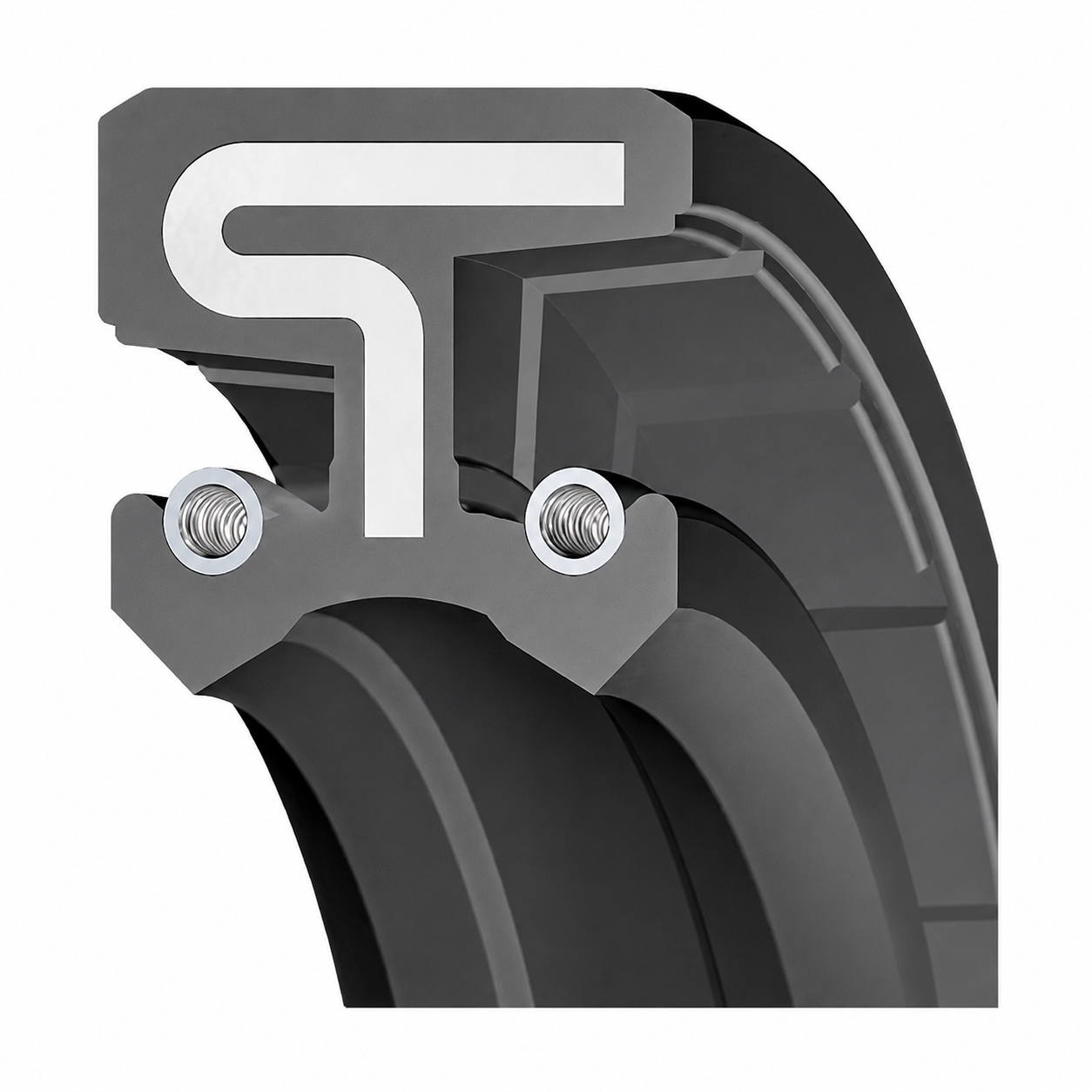
The DC oil seal is a double-effect rotary shaft seal used when two media must remain separated within one assembly. Instead of only retaining lubricant or keeping contamination out, the DC design uses two active sealing lips to seal in both directions around a rotating shaft.
Each sealing lip is supported by its own spring. This makes the DC oil seal suitable for applications with different lubricants, fluids or compartments on either side of the seal. Oil-Seal-Stocks supplies DC oil seals in materials such as NBR, FKM and ACM, with Silicone, HNBR, CR and EPDM available on request.
The DC oil seal is also known by several manufacturer references, including WAD, OS-D10, Duplex, AD, R-DUO, G2, BA DUO, 827 D, DGD, CBD, IELR, R22, RD, CK and KA-DUO.
The DC oil seal has two full-function sealing lips. Each lip is supported by its own garter spring, so both lips apply controlled radial pressure to the shaft. This is an important difference from oil seals where the second lip only works as a dust lip.
Because both lips actively seal, the DC rotary shaft seal can help prevent leakage in both directions. It also reduces the risk of cross-contamination between two media. This is useful when two oils, oil and grease, or a wet and dry side must stay separated.
The outer diameter of the DC oil seal is fully elastomer-coated and supplied with a smooth finish as standard. This rubber-coated outside helps provide static sealing in the housing, compensates for bore tolerances and absorbs thermal expansion, especially in light-metal housings.
The elastomer-coated outer diameter also makes the DC seal suitable for bores with increased surface roughness and for split housings. It reduces the risk of leakage along the outside diameter and helps prevent fretting corrosion.
Inside the seal, a metal reinforcing ring supports the shape of the seal. This helps prevent deformation during installation and operation, keeps the sealing forces more evenly distributed and gives the seal a stable position in the housing.
The DC oil seal is used where functional separation is more important than simple leakage prevention. Typical applications include rotating machine elements where two different media are present on either side of the seal.
Examples include combined gear-and-bearing arrangements, pump shafts with separated lubrication zones and drive units where different oil circuits must remain isolated. In these applications, the two active sealing lips allow one DC oil seal to perform a task that would otherwise require a more complex sealing arrangement.
The DC type is also suitable for housings with higher thermal expansion, such as light-metal housings, split housings and older constructions with less precise bore geometry. This makes it relevant for industrial gearboxes, auxiliary drives and retrofitted machinery where the housing conditions are not always ideal.
Material selection determines whether a DC oil seal is suitable for the medium, temperature and operating conditions of the application. NBR is the standard material for many oil and grease sealing applications. FKM is used when higher temperatures or more demanding chemical conditions are involved. ACM is often selected for hot oil environments, such as engine or transmission applications.
HNBR, Silicone, CR and EPDM are available for more specific requirements. Stainless-steel versions of the spring and reinforcing ring can also be used when corrosion resistance is needed.
| Material | Maximum temperature | Key properties |
|---|---|---|
| NBR | +100 °C | Oil and grease resistant, good wear resistance, cost-effective, limited ozone and heat resistance. |
| FKM | +200 °C | High-temperature resistant, excellent chemical resistance, fuel resistant, higher cost, reduced low-temperature flexibility. |
| HNBR | +150 °C | Improved heat resistance, ozone resistant, high mechanical strength, good oil compatibility. |
| ACM | +150 °C | Hot oil resistant, good aging stability, oxidation resistant, limited low-temperature performance. |
| VMQ | +200 °C | Wide temperature range, excellent low-temperature flexibility, low friction, lower wear resistance. |
| CR | +110 °C | Weather resistant, ozone resistant, moderate oil resistance. |
| EPDM | +140 °C | Heat and steam resistant, excellent aging resistance, not oil resistant. |
The DC oil seal has a clear function within the range of rotary shaft seals. It is not the same as a TC oil seal and it is not primarily designed as a dust-excluding seal.
A TC oil seal has a spring-loaded main sealing lip and a dust lip for extra protection against external contamination. A DC oil seal has two active sealing lips, each supported by its own spring. That makes DC the better fit when the goal is to separate two media on a rotating shaft.
Compared with DB oil seals, the DC design has an elastomer-coated outer diameter. DB oil seals also use two active sealing lips, but they have a metal outer diameter. The rubber-coated outside of the DC type makes it more forgiving in housings with tolerances, split housings or thermal movement.
| Type | Choose this type when... |
|---|---|
| DC oil seal | You need to separate two media on a rotating shaft with two active spring-loaded sealing lips and an elastomer-coated outer diameter. |
| TC oil seal | You need a standard rotary shaft seal with a main sealing lip and an additional dust lip. |
| DB oil seal | You need a related media-separating oil seal with two active sealing lips and a metal outer diameter. |
| SC oil seal | You need a single-lip rotary shaft seal for one-sided sealing. |
| TCN pressure oil seal | You need a pressure-resistant rotary shaft seal instead of a pressureless DC design. |
| All oil seals | You want to compare all available oil seal profiles in one overview. |
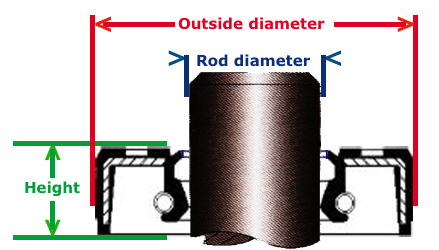
Correct selection of a DC oil seal starts with the shaft diameter, housing bore and seal width. The seal must match the original dimensions and the operating conditions of the application.
The DC oil seal is designed for pressureless applications, with a maximum permissible operating pressure of approximately 0.02 MPa. The shaft should match ISO h11 tolerance, with a minimum hardness of 45 HRC and a torsion-free surface finish within the specified roughness limits. The maximum peak-to-valley roughness of the shaft surface should not exceed Rmax 6.3 μm.
For the housing, ISO H8 is typically applied. Because the DC seal has an elastomer-coated outer diameter, it can be used in bores with increased surface roughness compared with metal-cased versions.
Temperature, rotation speed and medium compatibility must also be checked. For standard materials, the maximum circumferential speed is approximately 5 m/s. When synthetic lubricants or less common media are used, compatibility testing is recommended. In those cases, operating temperatures should preferably remain below 80 °C unless the material and medium combination has been proven in practice.
Oil-Seal-Stocks offers DC oil seals in a range of shaft, bore and width dimensions. Use the product filters to find the correct DC oil seal size, material, spring material and execution.
If the required size or material is not listed, contact us to check availability or a suitable alternative. This is especially useful when replacing a seal marked with a manufacturer-specific reference instead of the DC type name.
Different manufacturers use different names for the same or comparable DC oil seal design. This can make replacement harder when the original seal is marked with a supplier-specific code.
Use the cross-reference table below to compare DC oil seal references such as WAD, OS-D10, Duplex, AD, R-DUO, BA DUO, DGD, CK and KA-DUO. Always check the dimensions, material, spring type and operating conditions before selecting a replacement seal.
| Manufacturer | DC oil seal reference |
|---|---|
| Dichtomatik | WAD |
| Anyseals | OS-D10 |
| Chicago Rawhide (SKF) | DUPLEX |
| Elring | AD |
| ERIKS | R-DUO |
| FP Paris | G2 |
| FST | BA DUO |
| Goetze | 827 D |
| KACO | DGD |
| Kramp | CBD |
| Paulstra | IELR |
| Pioneer Western | R22 |
| Rolf | RD |
| Stefa (Trelleborg) | CK |
| NOK / Taiwan NOK | DC |
| Vota | BA DUO |
| Ebele | R-DUO |
| Kimman | KA-DUO |
If you are not sure which size, material or reference you need, contact Oil-Seal-Stocks. Send us the dimensions, application details or the reference printed on the old seal, and we will help you find the right DC oil seal or a suitable alternative.
A DC oil seal is used to separate two media on a rotating shaft with one seal. It is often used when two lubricants, fluids or compartments must remain separated within the same assembly.
No. A DC oil seal does not have a dust lip. It has two active sealing lips, and each lip is supported by its own spring.
The DC oil seal is designed for pressureless applications up to approximately 0.02 MPa. For applications where pressure resistance is the main requirement, compare a TCN pressure oil seal.
The elastomer-coated outer diameter provides static sealing in the housing, compensates for tolerances and helps prevent fretting corrosion. It also makes the seal suitable for light-metal housings, split housings and bores with increased surface roughness.
Yes. The rubber-coated outer diameter helps absorb thermal expansion and supports reliable sealing in light-metal housings.
Both DC and DB oil seals are designed to separate two media with two active sealing lips. The main difference is the outer diameter. A DC oil seal has an elastomer-coated outer diameter, while a DB oil seal has a metal outer diameter.